
“`html
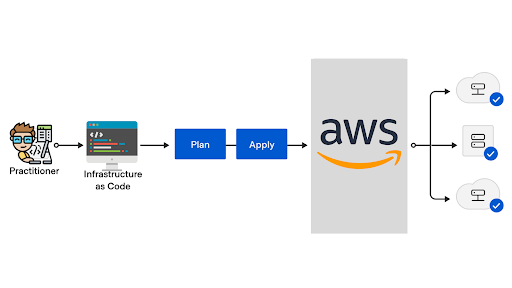
CDK: Infrastructure as Intuition
Introduction
Ever felt like wrestling an octopus while trying to provision cloud infrastructure? You’re not alone. The old way – wrangling YAML files, deciphering complex configurations, and generally feeling like you’re speaking a foreign language to your cloud provider – has been a pain point for developers for far too long. It’s clunky, error-prone, and frankly, takes away from the fun part: building awesome applications.
But what if provisioning infrastructure felt… intuitive? What if, instead of endless configuration files, you could define your cloud resources using the programming languages you already know and love? Enter the AWS Cloud Development Kit (CDK).
Explanation of the Problem: Configuration Chaos and the Developer Bottleneck
Let’s be honest, traditional Infrastructure as Code (IaC) – think CloudFormation, Terraform – while powerful, often introduces a steep learning curve. You spend more time debugging syntax errors in YAML than actually designing your application’s architecture. This translates to:
- Slower Development Cycles: Developers are bottlenecked by the complexities of infrastructure provisioning. New features take longer to deploy, and time-to-market suffers.
- Increased Error Rate: Hand-crafted configurations are prone to errors, leading to deployments that fail, security vulnerabilities, and unexpected costs.
- Maintenance Nightmares: Maintaining complex configurations over time becomes a challenge. Refactoring and updating infrastructure becomes a risky and time-consuming endeavor.
- Vendor Lock-in (Potentially): While many IaC tools are vendor-agnostic, the nuances of each cloud provider’s specific configuration language can create a subtle, but real, barrier to moving your infrastructure.
The short-term impact? Frustrated developers, delayed releases, and higher operational costs. The long-term impact? It can stifle innovation, prevent your team from adapting to changing market demands, and ultimately, impact your bottom line.
Solutions: CDK – A Paradigm Shift
The AWS CDK offers a different approach. It’s a framework that lets you define your cloud infrastructure as code using familiar programming languages like TypeScript, Python, Java, C#, and Go. Think of it as a high-level abstraction that simplifies the creation and management of AWS resources.
Here’s why CDK feels like “infrastructure as intuition”:
- Familiar Languages: Leverage your existing programming skills to define infrastructure. No need to learn a new configuration language from scratch.
- Higher-Level Abstractions: CDK provides pre-built components called “Constructs” that represent common infrastructure patterns. This eliminates the need to write verbose configurations from scratch.
- Type Safety and Validation: Programming languages offer type checking and static analysis, catching errors early in the development process.
- Code Reusability: Create reusable components (Custom Constructs) that encapsulate common infrastructure patterns, promoting consistency and reducing duplication.
- Integration with IDEs: Utilize familiar IDE features like code completion, refactoring, and debugging to work with your infrastructure code.
Practical Solutions with CDK:
Let’s look at some concrete examples:
1. Deploying a Simple Web Application:
Instead of crafting a large CloudFormation template, you can define a web application deployment using just a few lines of TypeScript:
import*as cdk from'aws-cdk-lib';import*as s3 from'aws-cdk-lib/aws-s3';exportclass MyWebAppStack extends cdk.Stack{constructor(scope:cdk.Construct,id:string,props?:cdk.StackProps){super(scope,id,props);//Create an S3 bucket to host our websitconst websiteBucket=new s3.Bucket(this,'WebAppBucket',{websiteIndexDocument:'index.html',publicReadAccess:true});//Output the bucket URLnew cdk.CfnOutput(this,'BucketURL',{value:websiteBucket.bucketWebsiteUrl,});}}This code defines an S3 bucket configured for static website hosting. CDK automatically generates the necessary CloudFormation template behind the scenes.
2. Building a Serverless API:
Creating a serverless API with API Gateway and Lambda becomes significantly easier with CDK. You can define the API endpoints, Lambda functions, and IAM roles in a concise and manageable way.
Case Study: Streamlining Development at “Acme Corp”
Acme Corp, a fast-growing e-commerce company, was struggling with its infrastructure provisioning process. Their developers spent a significant amount of time managing CloudFormation templates, leading to delayed releases and increased operational overhead. By adopting CDK, they were able to:
- Reduce Infrastructure Code by 70%: The use of Constructs allowed them to express infrastructure requirements in a more concise and reusable manner.
- Accelerate Development Cycles by 40%: Developers could now provision infrastructure independently, without relying on specialized operations teams.
- Improve Code Quality: Type safety and static analysis helped them catch errors early, leading to more stable and reliable deployments.
Alternative Approaches and Considerations:
While CDK offers significant advantages, it’s not the only game in town. Here are some alternative approaches and considerations:
- Terraform: A popular, vendor-agnostic IaC tool that supports multiple cloud providers. It offers a mature ecosystem and a large community.
- CloudFormation: The native AWS IaC service. It provides tight integration with AWS services and offers fine-grained control over resource configuration.
- Pulumi: Another IaC tool that allows you to define infrastructure using programming languages. It supports multiple cloud providers and offers a rich set of features.
The best approach depends on your specific needs and priorities. Consider the following factors:
- Cloud Provider Support: Do you need to support multiple cloud providers?
- Team Skills: Are your developers familiar with the programming languages supported by CDK?
- Complexity: How complex is your infrastructure?
- Community Support: How important is community support and documentation?
Conclusion: Embrace the Future of Infrastructure
The AWS CDK represents a significant step forward in the evolution of Infrastructure as Code. By empowering developers to define infrastructure using familiar programming languages, it lowers the barrier to entry, accelerates development cycles, and promotes better code quality.
The time for clunky, error-prone configuration files is over. Embrace the intuitiveness of CDK and unlock the full potential of your cloud infrastructure. Start small, experiment with simple use cases, and gradually integrate CDK into your existing workflows. The benefits – faster development, improved reliability, and happier developers – are well worth the effort.
So, ditch the octopus, and start building infrastructure that feels like an extension of your code. The future of infrastructure is intuitive, and it’s here now with CDK.
“`