
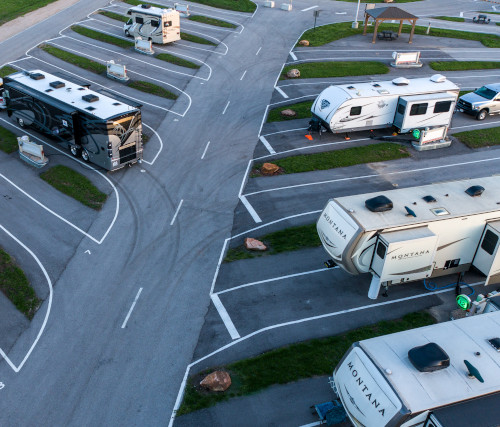
RV Self-Park: Your Freedom, Their Fees.
Introduction
The open road beckons.The allure of waking up to a new vista every morning,the freedom to roam wherever your wanderlust takes you – that’s the RV dream.But lurking beneath the gleaming chrome and panoramic views is a growing reality that can quickly deflate that dream: the rising cost of RV parking.
It used to be that finding a spot for your rig was as simple as pulling into a campground or, with a little planning, finding free or low-cost boondocking locations.Today?It’s increasingly a competitive sport, and the prize is often a hefty bill.From cramped private RV parks charging resort prices to public lands becoming increasingly restrictive and heavily regulated,the landscape of RV parking is shifting,and it’s shifting in a way that’s hitting RVers right in the wallet.
The Short-Term Sting: Unexpected Costs and Limited Choices
The immediate impact of rising RV parking fees is obvious: higher travel expenses.That meticulously crafted budget for your cross-country adventure can quickly unravel when you’re consistently paying $50, $75, even $100+ per night, especially in peak seasons and popular destinations.Imagine those spontaneous weekend getaways suddenly becoming financially prohibitive.The freedom to explore is curtailed by the practical reality of affording the places to park.
Beyond the direct financial strain, there’s the frustration of limited choices.Demand for RV spots is soaring, driven by a growing RVing population, while the supply of affordable and accessible parking isn’t keeping pace.This often translates to settling for less-than-ideal locations, sacrificing desired amenities, or even struggling to find any availability at all, particularly during holidays and events.That picturesque lakeside campsite you envisioned?You might end up squeezed between two behemoth rigs next to the highway.
The Long-Term Ripple: Impacts on RV Culture and Accessibility
The long-term implications are even more profound.The rising cost of RV parking threatens the very essence of RVing – its accessibility and affordability.For many, RVing is a lifestyle choice, a way to embrace travel and adventure without breaking the bank.If parking becomes prohibitively expensive, it risks turning RVing into a pastime accessible only to the wealthy.
This also impacts the vibrant RV community.The spirit of sharing tips, swapping stories, and helping fellow travelers thrives on the affordability and accessibility of the lifestyle.As costs rise and choices dwindle, this sense of community could erode, replaced by increased competition and resentment over limited resources.
Furthermore, the increasing financial barriers could deter younger generations from embracing RVing.The future of this iconic American pastime depends on attracting new enthusiasts, and if the perception becomes that RVing is too expensive, that future could be jeopardized.
Fighting Back: Practical Solutions for the Modern RVer
So, what can you do?Fortunately, the situation isn’t hopeless.There are practical steps you can take to mitigate the impact of rising RV parking fees and reclaim your freedom on the road.
- Embrace the Boondocking Lifestyle (Responsibly):
Boondocking, or dry camping without hookups, is the ultimate way to bypass expensive RV parks.Public lands managed by the Bureau of Land Management (BLM) and the US Forest Service (USFS) often offer free or very low-cost camping.
- How to do it: Invest in solar panels, a generator, and water storage.Learn about water conservation techniques and waste management practices.Familiarize yourself with Leave No Trace principles to minimize your environmental impact.
- Example:Many BLM areas in the Southwest, like those near Quartzsite, Arizona, offer free camping for extended periods.
- Caution:Thoroughly research your chosen boondocking location.Ensure it’s legal to camp there, that your rig is suitable for the terrain, and that you’re aware of any restrictions or permits required.
- Explore Alternative Campgrounds and Membership Programs:
Don’t limit yourself to the big-name RV parks.Explore smaller, privately owned campgrounds, state parks, and county parks.These often offer lower rates and a more authentic camping experience.
- How to do it:Utilize online resources like Campendium, Allstays, and Freecampsites.net to find hidden gems.Call ahead to inquire about rates, amenities, and availability.
- Example:Harvest Hosts and Boondockers Welcome offer unique camping experiences on private properties, such as wineries, farms, and breweries, often for free or a nominal fee (usually in exchange for supporting the host’s business).
- Plan Ahead and Book in Advance:
Proactive planning is crucial.Secure your reservations well in advance, especially during peak seasons and holidays.This not only guarantees you a spot but also often allows you to take advantage of early-bird discounts.
- How to do it:Utilize online booking platforms like Recreation.gov for federal campgrounds.Set up alerts for popular campgrounds to be notified when cancellations occur.
- Example:Many national park campgrounds book up months in advance.Planning ahead ensures you don’t miss out on these coveted locations.
- Travel Off-Season and Explore Less Popular Destinations:
Consider traveling during the shoulder seasons (spring and fall) when crowds are thinner and rates are lower.Explore less-traveled destinations that offer comparable beauty and fewer parking constraints.
- How to do it:Research weather patterns and seasonal attractions in different regions.Be open to exploring alternative routes and smaller towns.
- Example:Instead of visiting the Grand Canyon in July, consider visiting in April or October.You’ll experience pleasant weather, fewer crowds, and potentially lower parking fees.
- Become a Savvy Negotiator and Advocate:
Don’t be afraid to negotiate with campground owners, especially for extended stays.Inquire about discounts for seniors, veterans, or members of RV clubs.Advocate for more affordable and accessible RV parking in your local community.
- How to do it:Politely inquire about discounts when making reservations.Join RV advocacy groups that work to protect RVers’ rights and access to public lands.
- Example:Many RV parks offer weekly or monthly rates that are significantly lower than the daily rate.
- Consider Workamping or Volunteering:
Workamping involves exchanging labor for RV parking and sometimes even a small stipend.Volunteering at national parks, state parks, and wildlife refuges can also provide free or discounted camping.
- How to do it:Explore websites like Workamper News and CoolWorks.Network with other RVers to learn about workamping opportunities.
- Example:Many campgrounds hire workampers to assist with tasks such as maintenance, registration, and cleaning.
A Brighter Road Ahead: Taking Control of Your RV Adventure
The rising cost of RV parking is undoubtedly a challenge, but it’s not insurmountable.By embracing a combination of these strategies – from boondocking responsibly to planning ahead and advocating for change – you can reclaim your freedom on the road and continue to enjoy the RV lifestyle without breaking the bank.
The future of RVing hinges on our collective ability to adapt and innovate.By sharing our experiences, supporting responsible development of RV parks, and advocating for access to public lands, we can ensure that the open road remains open to all.The RV dream is still alive and well; it just requires a little more savvy and a proactive approach.So, pack your bags, fire up that engine, and hit the road knowing that you have the power to navigate the challenges and create your own unforgettable RV adventure.